



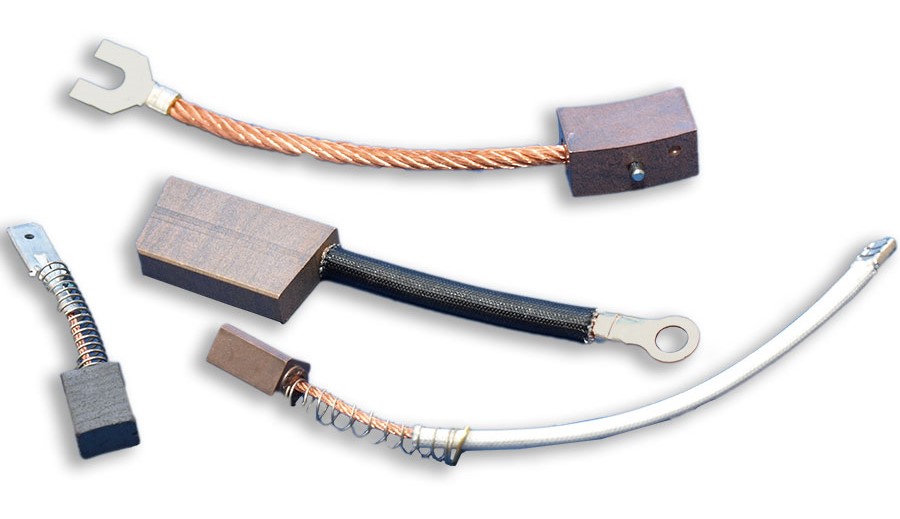
CARBON GRAPHITE INDUSTRIAL BRUSHES MANUFACTURING
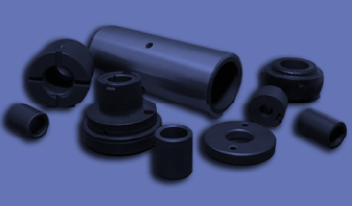
St. Marys Carbon Brushes are manufactured from the highest quality carbon graphite, electrographite, resinbonded graphite, copper graphite, silver graphite and other metal graphite materials to suit your specific OEM or aftermarket application. All of our brushes, from the blending of raw materials to the finished product, are made in-house by our specialized craftsmen.
Each of our industrial brushes can be custom-manufactured to your specific requirements. We develop our own proprietary grades and manufacture each product in-house, so we will work closely with you to find the right brush grade or develop new grades to optimize your product’s performance, reduce wear and decrease costly maintenance.
ENVIRONMENT, OPERATING CONDITIONS & APPLICATIONS

HIGH CONDUCTIVITY
Only the purest metals and materials are used to provide for consistently high conductivity and our ability to custom-design means that we can adjust the mix of our materials to meet your specific conductivity needs.

SELF-LUBRICATING
Our brushes are self-lubricating, meaning that a separate lubricant (e.g., oil) is not required, which allows them to be used in both dry-running and sanitary environments.

ANTI-WELDING/MELTING
As our brushes can withstand high temperatures, they are resistant to melting or welding to your equipment during operation, allowing your equipment to run longer and perform better.

OXIDATION-RESISTANT
Our proprietary mix of carbon graphite resists chemical degradation of the surface material, allowing our brushes to be used in harsh environments while maintaining brush performance.
KEY END PRODUCTS
Our Industrial Brush products are used in manufacturing processes to develop a wide range of end products. Remember that we custom-design our products to fit your needs, so please contact us if you have a need outside of those below and we’ll work with you to find a solution.
- Appliances
- Conveyors / Hoists
- Elevators
- Forklifts / Lift
- TrucksLight / Heavy Duty Vehicles
- Overhead Cranes
- Power Tools
- Rail Systems
HOW CAN WE HELP YOU ?
CARBON GRAPHITE INDUSTRIAL BRUSHES DETAILS
Working Temperature
- Minimum
- Runs in cryogenic temperatures (no true minimum value)
- Maximum
- Carbon/Graphite up to 700 F
- Electrographite up to 900 F
- Electrographite with inorganic additives up to 1150 F
- Other oxidation inhibitors (impregnants) up to 1200 F
- In inert/neutral environments
- Carbon/Graphite up to 1600 F
- Electrographite up to 5000 F
Key Markets
You can find our industrial brushes products used across a wide range of different markets, including:
- Aerospace
- Automotive
- Construction
- Mining
- Power Generation
- Renewable Energy
- Transport
Average Oxidation & Chemical Resistance
- Carbon grades are resistant to most chemicals
Spring Pressure Range
- Application dependent
Amp per sq inch
- 75 – 150 A/in2
CARBON GRAPHITE GRADE
| Grade | Density(lbs./ft.3) | Flexural Strength (psi) | Current Capacity (Amps/in2) | Scleroscope Hardness | Volts Contact Drop | Coefficient of Friction | % Metal | Applications |
|---|---|---|---|---|---|---|---|---|
| B-16 | 102.96 | 4,000 | 75 | 60 | High | Low | N/A | Industrial Brushes |
| B-17 | 96.72 | 4,500 | 65 | 65 | Very High | Medium Low | N/A | Industrial Brushes |
| B-86 | 102.96 | 4,000 | 65 | 40 | Medium | Low | N/A | Industrial Brushes |
| B-119 | 94.22 | 3,500 | 60 | 50 | Very High | Medium Low | N/A | Industrial Brushes |
| F-90 | 171.60 | 4,500 | 100 | 30 | Low | Low | 42% | Industrial Brushes |
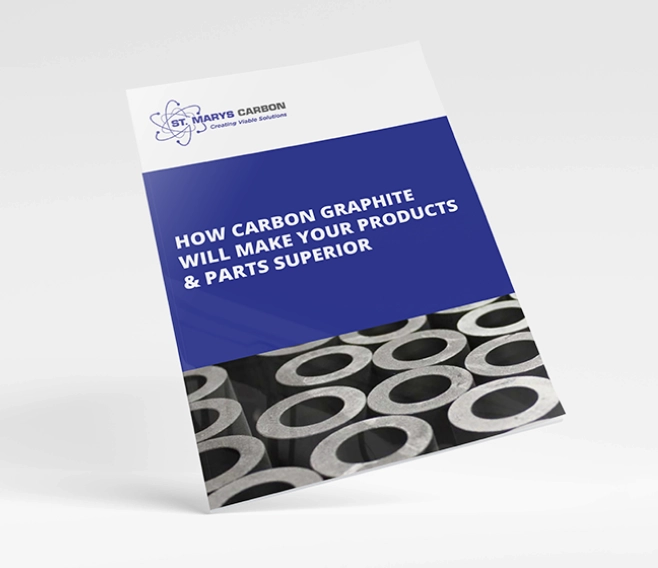
How carbon graphite will make your products & parts superior
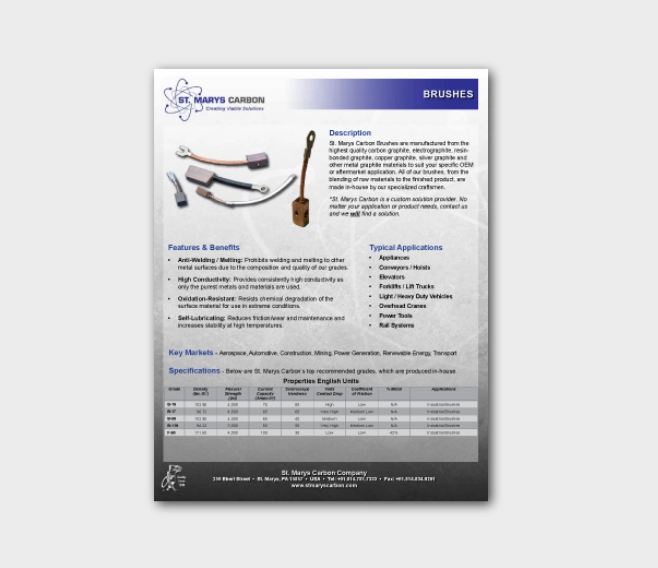
Industrial Brushes Data Sheet
Explore our latest resources
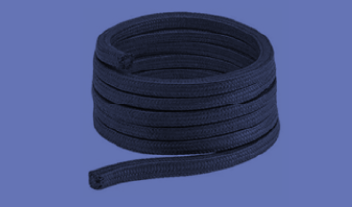
Carbon Graphite Mechanical Seal Types
Rotating equipment often requires a dynamic mechanical seal to create a seal between a rotating shaft and a stationary body and prevent the escape of process fluid(s) including liquid and/or gas. They can also be used in mixer seals to prevent fugitive ambient particulates from entering a contained vessel being being mixed such as a pharmaceutical reaction…
Why Bearings Fail and How to Prevent It
All bearings have a fixed life expectancy. Some are replaced because of normal wear or spalling, and others need replacing because of premature wear or failure. An unexpected failure can cause damage to equipment, downtime, costly replacement, and possibly even injury. And, even before they fail, the premature wear is likely to have effects on performance …
Carbon Graphite Conductivity & Expansion
When deciding on the materials for carbon graphite components or parts, it all starts with a thorough review of the application which includes the components’ form/function/fit and property identifying the “must haves” and the “nice to haves” and melding these with a design for manufacturability. There are three important physical characteristics …


