




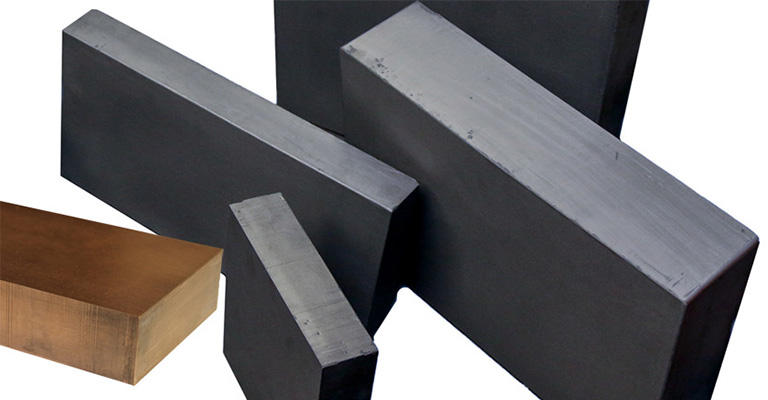
Carbon Blanks and Blocks for Precision Machining and Demanding Applications
When machining precision components, the starting material must perform predictably under electrical, thermal, mechanical, and environmental demands. Carbon graphite blanks and blocks are used when applications require consistent material behavior and efficient machining in demanding conditions.
- Machining-ready blanks with fast lead times
- Grades matched to electrical, thermal, and mechanical needs
- Cut sizes and tolerances that reduce scrap and rework
- Material guidance for your specific application
Type of Customized Carbon Graphite Blanks
Our carbon graphite blanks can be custom-manufactured to your specific requirements. We develop our own proprietary carbon grades, so we will work closely with you to develop the right blanks for your customized products. The type of blank that you require depends on your specific application. We provide the following options:
Carbon Rod Blanks
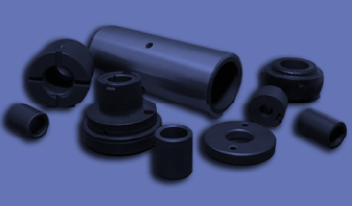
Reliable stock for machining bushings, bearings, seal rings, vanes, and current-transfer parts. Available saw-cut for your secondary ops or ground to tighter tolerance to speed assembly and reduce finishing.
Common uses:
- Bearings & bushings
- Mechanical seal faces
- Pump/compressor vanes
- Electrical/brush components
What to specify: OD/ID/length, finish (saw-cut vs ground), tolerance range, target environment, and grade preference if known.
Carbon Plate / Block Blanks
Flat stock and thick blocks for rings, segments, plates, fixtures, and large components. Supplied cut-to-size and optionally ground for thickness/flatness control.
Common uses:
- Mechanical seal plates
- Wear plates
- Furnace/kiln fixtures
- Machining billets
What to specify: L×W×T (or block dims), flatness/parallelism needs, finish, and service conditions.
Carbon Slug Blanks
Short lengths and custom slugs for small turned/milled parts where yield and spindle time matter. Ideal when you need repeatability with minimal prep.
What to specify: Diameter/length, length tolerance, chamfer/deburr needs, finish, and operating environment.
Environments, Conditions and Applications for Industrial Carbon Blanks

Electrical Transmission
Support dynamic electrical transmission applications with material properties selected for stable electrical performance.

Dry Running / Self Lubricating
Enable dry-running operation without external lubrication to reduce maintenance and system complexity.

High Temperatures
Withstand extremely high operating temperatures while maintaining strength and dimensional stability.

Low Temperatures
Maintain key material characteristics in extremely low-temperature operating environments.

Corrosive & Harsh Environments
Resist degradation in corrosive and harsh environments to support long-term performance.

High Friction
Reduce friction and resist wear in high-friction applications to extend component life.

Sanitary Environments
Support sanitary applications such as food, beverage, and medical environments where material cleanliness is critical.

Submerged / Marine Environments
Operate reliably in submerged applications, including freshwater and saltwater environments.

High Altitude
Maintain performance at high altitudes using grades designed for reduced pressure conditions.
HOW CAN WE HELP YOU ?
Industrial Carbon Blank Details
Working Temperature for Carbon Blanks & Blocks
- Minimum
- Runs in cryogenic temperatures (no true minimum value)
- Maximum
- Carbon/Graphite up to 700 F
- Electrographite up to 900 F
- Electrographite with inorganic additives up to 1150 F
- Other oxidation inhibitors (impregnants) up to 1200 F
- In inert/neutral environments
- Carbon/Graphite up to 1600 F
- Electrographite up to 5000 F
Engineered for Demanding Environments
- High-Temperature: Furnaces, ovens, kilns, and hot gas streams
- Corrosive/Harsh Media: Chemicals, slurries, and process fluids
- Sanitary Processes: Food, beverage, and pharmaceutical lines
- Marine/Submerged: Pumps, seals, and bearings in water or process liquids
- High-Altitude / Vacuum / Inert: Aerospace, vacuum furnaces, and inert gas systems
- Dry-Running / Self-Lubricating: Avoids galling where traditional lubrication fails
Finish & Tolerances
- Saw-cut: Cost-effective stock for secondary machining
- Precision-ground: Dimensional/tolerance control to speed assembly and reduce rework
- Surface considerations: Specify roughness, flatness, straightness, and parallelism where critical
Average Oxidation & Chemical Resistance
- Carbon grades are resistant to most chemicals
Spring Pressure Range
- Application dependent
Typical Applications (Machined from Our Blanks)
- Bearings & Bushings (dry-running or lubricated service)
- Mechanical Seal Rings & Faces
- Rotors & Vanes for pumps and compressors
- Electrical/Current-Transfer Components (brushes, contacts)
- Furnace/Kiln Fixtures & Plates
- Custom Wear Parts for corrosive or sanitary duty
Frequently Asked Questions (FAQs)


How carbon graphite will make your products & parts superior
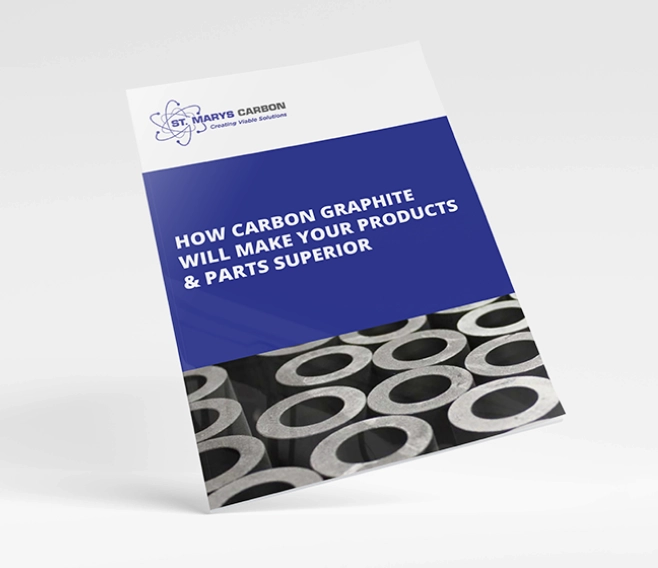
Industrial Carbon Graphite Rods, Plates & Slugs Data sheet
Explore our latest resources
Carbon Graphite Mechanical Seal Types
Rotating equipment often requires a dynamic mechanical seal to create a seal between a rotating shaft and a stationary body and prevent the escape of process fluid(s) including liquid and/or gas. They can also be used in mixer seals to prevent fugitive ambient particulates from entering a contained vessel being being mixed such as a pharmaceutical reaction…
Why Bearings Fail and How to Prevent It
All bearings have a fixed life expectancy. Some are replaced because of normal wear or spalling, and others need replacing because of premature wear or failure. An unexpected failure can cause damage to equipment, downtime, costly replacement, and possibly even injury. And, even before they fail, the premature wear is likely to have effects on performance …
Carbon Graphite Conductivity & Expansion
When deciding on the materials for carbon graphite components or parts, it all starts with a thorough review of the application which includes the components’ form/function/fit and property identifying the “must haves” and the “nice to haves” and melding these with a design for manufacturability. There are three important physical characteristics …


